


 0
0 622 Views
 17 December 2025
 Elizaveta Safonkina, Senior Researcher of the School of International Relations Saint Petersburg State University
International academic conference on the topic “BRICS Strategic Communication in Global Governance” was held at the Institute of Philosophy of the Russian Academy of Sciences in Moscow on 31 October 2025. The conference was organized by the Department of Eastern Philosophies of the RAS Institute of Philosophy, UNESCO Chair “Philosophy in the Dialogue of Cultures” of the RAS Institute of Philosophy and the international group of experts studying threats to international information and psychological security through the malicious use of artificial intelligence (Research MUAI).
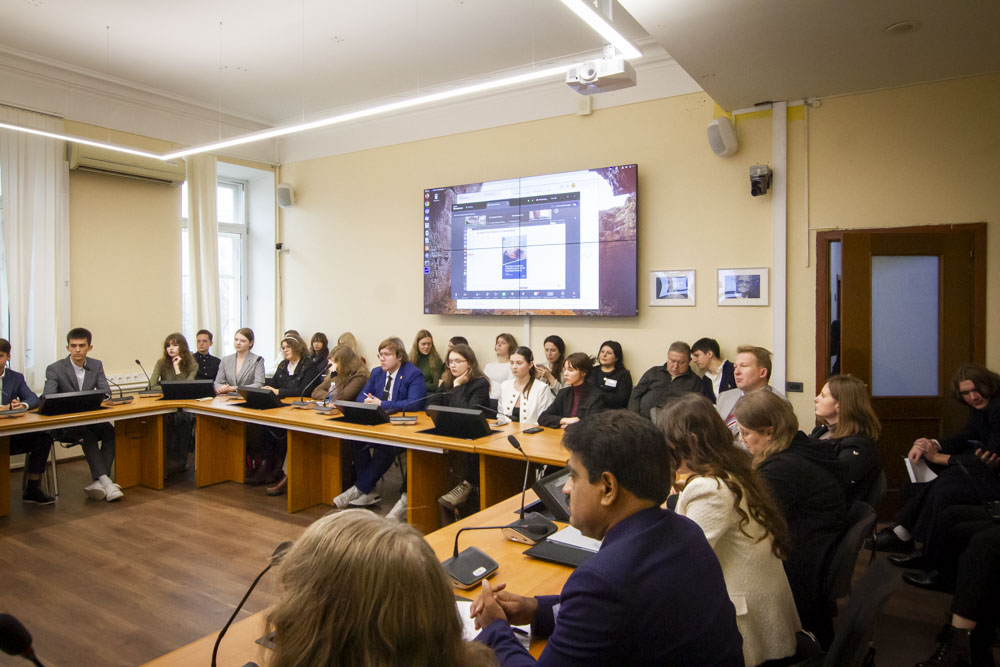
The conference is the first in a series of international academic meetings to be held in BRICS member and partner countries and other countries that develop cooperation with the Group. 55 researchers from 23 countries in Asia, Africa, Latin America, and Europe presented their papers at the conference. The conference featured nine papers funded by the Russian Science Foundation grant, “BRICS Strategic Communication in Global Governance” (No. 25-18-00699, https://rscf.ru/project/25-18-00699/), among others. This was the first conference on this topic to be held with such broad international participation, both in Russia and globally.
Plenary session
The conference opened with introductory speeches by Prof. Evgeny N. PASHENTSEV, Chairman of the International Program Committee and Chief Researcher at the Diplomatic Academy of the Ministry of Foreign Affairs of Russia and St. Petersburg State University, and Doctor of Historical Sciences, and Victoria G. LYSENKO, Chairman of the Conference Organizing Committee, Chief Researcher, Head of the Eastern Philosophies Sector at the Institute of Philosophy of the Russian Academy of Sciences, and Head of the UNESCO Chair “Philosophy in Dialogue of Cultures.”
Prof. PASHENTSEV, defining the significance of the event, emphasized that a turning point in human history is approaching. The Doomsday Clock, which has long been a recognized indicator of the world’s existential vulnerability, was reset in 2024 from 90 seconds to 89 seconds before midnight, marking the closest time to a global catastrophe in history.
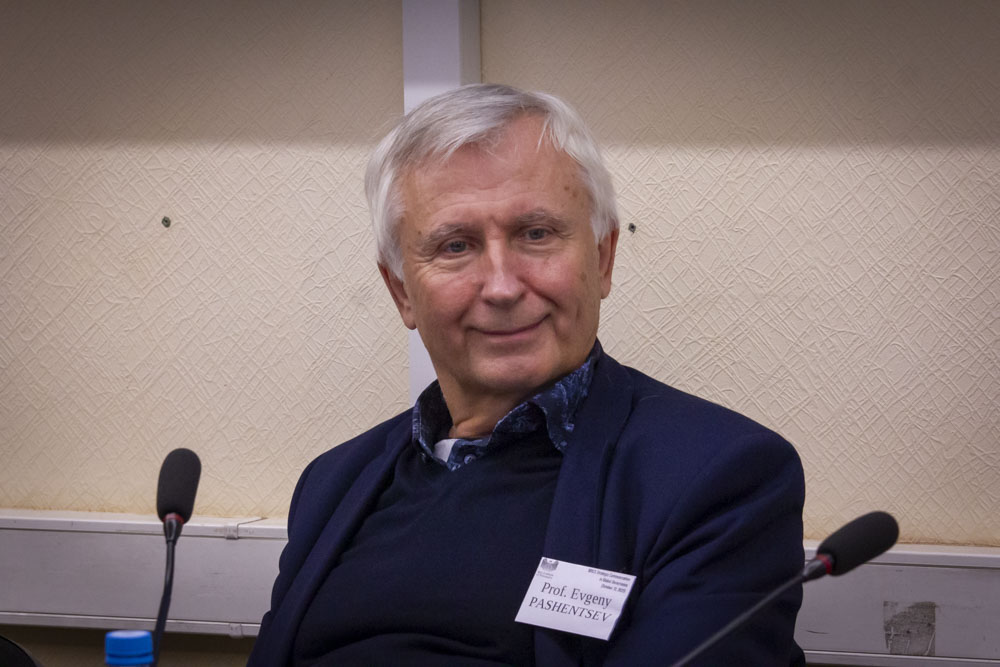
The question of who can save the world and how is of concern to hundreds of millions of people today. Strategic communication, as one of the most important tools of global governance, can both significantly enhance human development and dangerously exacerbate existential risks. The speaker stated that the task facing conference participants is not to acknowledge humanity’s problems, but to make their professional contribution to finding ways to overcome them through strategic communication. There are both common ground and differences in understanding the essence, potential, and risks of strategic communication. Prof. Pashentsev expressed hope that, within the framework of a fruitful discussion, individual differences will not prevent the participants from proposing specific recommendations for improving the effectiveness of BRICS strategic communications.
The rise of BRICS, its more than doubling of its share of global GDP, the rapid narrowing of the scientific and technological gap with Western countries, and its balanced international approach that respects the rights and unique development choices of nations are making this group increasingly influential. Rising countries, where their words match their actions, have better conditions for developing strategic communication than declining states.
The rapidly growing BRICS does not need confrontation with the outside world. The absence of peace and instability pose dangerous risks to its further development. Therefore, BRICS and its member countries need strategic communication that will help resolve global problems peacefully, while also soberly addressing existing threats and contradictions in society and preparing people for various international development scenarios.
Prof. Pashentsev noted that the core element of BRICS strategic communication is the concrete actions of the association itself and its members. With this approach, strategic communication is an integral part of global governance, ensuring that BRICS’ actions, words, and images are aligned with the perceptions and reactions of internal and external target audiences.
In her welcoming address, Victoria LYSENKO noted the importance of intercultural philosophy and the proper development of intercultural dialogue. She believed that holding such a conference is a practical implementation of strategic communication. She emphasized the need to consider the specificities of each BRICS member and partner country, especially as the group develops dynamically and new members join. This allows for the identification of common ground, which is why it is crucial that representatives of BRICS countries from all continents are present at the conference. The culture, experience, and values of different nations would enable the participants to address the international challenges facing BRICS.

Prof. Lysenko emphasized that humanity is currently undergoing a period of transformation, with technology advancing rapidly. Artificial intelligence (AI) is changing not only our thinking but also the structure of international relations. One of the most important questions for BRICS right now is whether the group can stabilize the situation and offer new solutions to replace outdated ones. To find answers to this and other questions, the conference brought together experts from various fields: political scientists, AI specialists, economists, cultural experts, and diplomats. In conclusion, Prof. Lysenko briefly outlined the conference’s objectives, primarily the search for realistic ways to develop strategic communication, overcome cultural differences and civilizational barriers, and wished the participants a productive discussion.
The plenary session focused on general issues of the BRICS strategic communication, setting the framework for the entire event. The main topic was BRICS strategic communication and its importance for this influential international association and the global community. Speakers presented their views on the main objectives and areas of the BRICS SC, its achievements and challenges, trends and prospects, and forms and methods of implementation. The moderators of the plenary session were Prof. Evgeny Pashentsev and Dr. Oleg Kocherov.
Prof. Guihong ZHANG, Director of the Center for the Study of the UN and International Organizations, Institute of International Studies, Fudan University began his speech “BRICS Strategic Communication in Global Governance: Chinese Perspectives” by posing three questions. First, what is strategic communication; second, why is it so important for BRICS countries to engage in strategic communication on global governance issues; third, how can BRICS countries effectively implement their strategic communication on global governance issues.

Prof. Zhang noted that strategic communication differs from diplomatic consultations. It does not address functional issues such as security, economics, or culture. Instead, it addresses comprehensive, strategic, and long-term issues. Its goal is to achieve political consensus and strengthen strategic trust. The speaker then defined the levels of strategic communication and provided specific examples from China’s strategic communication practices.
In his answer to the second question, Prof. Zhang noted that strategic communication on global governance issues among BRICS countries differs from typical bilateral strategic communication. First, it takes place within an international organization rather than between two major powers. While BRICS members include global and regional powers, it also includes medium-sized and small states. Second, it is specifically focused on global governance. Third, this form of multilateral strategic communication is arguably more complex due to the more diverse interests of BRICS member states.
Expanding on his answer to the “why” question, the speaker firstly noted the critical importance of strategically coordinating BRICS’s actions as a group of key developing countries in response to the transformation of global governance. Secondly, he emphasized the need for BRICS, in response to the unilateral actions of the United States and some other countries, to establish strategic communication to preserve an international order based on international law. Thirdly, BRICS has evolved from an emerging market organization into the most significant and influential international platform representing the Global South, making strategic cooperation among its members not only logical but also essential.
Turning to the third, practical question of how BRICS countries can conduct strategic communication on global governance issues, Prof. Zhang emphasized that the priority should be identifying key areas for strategic communication and cooperation among BRICS countries, focusing on key global governance issues where tensions are highest and the need for reform is most acute. Prof. Zhang then outlined some of these areas, including the need for reform of the international financial system, climate governance, digital governance, and control over AI technologies, among others. In conclusion, Prof. Zhang noted that strategic communication on global governance issues among BRICS countries is of paramount importance both for the future development of BRICS itself and for the process and effectiveness of global governance reform. The “Pact for the Future” adopted at the UN Future Summit in 2024, along with China’s Global Governance Initiative, provide the fundamental basis for our research project on BRICS strategic communication.
Prof. Greg SIMONS, Professor of Journalism at the Department of Journalism and Media, Daffodil International University (Dhaka, Bangladesh) in his presentation “BRICS Strategic Communication: Understanding the Offensive and Defensive Roles of the Fifth Dimension of Strategy” identified a fifth, intangible dimension in addition to the four dimensions of geopolitical strategy implementation (land, water, air, space). He described this as the role of information and knowledge in shaping people’s perceptions and interactions. He believes it is in this dimension that the United States faces challenges and limitations.

Western powers, led by the United States, have long pursued a strategy of disrupting the integrity of emerging alternative alliances, seeking to limit the influence of multilateral alliances that could challenge the existing geopolitical configuration, as well as to contain individual BRICS member countries (Russia in Europe, Iran in Western Asia, China and the Indo-Pacific region). Prof. Simons noted that Western hegemony (of the Global North) is declining, reflected in the weakening appeal of Western civilization. Meanwhile, the non-Western international order (of the Global South) is on the rise, increasing its power and influence.
According to Prof. Simons, the Global North uses information and knowledge to create an obstructionist foreign policy and prevent key players in the Global South from achieving their foreign policy goals of increasing power and influence in the world. This is because the primary strategic goal of the United States is to try to maintain some form of hegemony. Absolute hegemonic status is no longer a question. Indeed, it can be argued that even relative hegemonic status is under serious pressure, particularly in certain regions of the world.
In light of this, there is a need to develop measures of cognitive psychological defense against Western manipulation. It is essential to strengthen the internal cohesion of BRICS members by coordinating approaches to key political and economic issues, using joint projects and scientific and technological innovations to build trust and solidarity. To strengthen the model, it is necessary to develop mechanisms for enhancing resilience and communicate the advantages of the Global South model to the international community. It is important not only to communicate these advantages, but also to create an attractive overall image. This requires proactive actions that can shift the established system of the Global North. This process entails rethinking the traditional approach to international interaction, abandoning the old hierarchical structure in favor of mutually beneficial partnerships.
Prof. Simons highlighted the nuclear industry as elements worth considering in developing and strengthening the BRICS-supported Global South model. The use of nuclear energy reduces dependence on traditional hydrocarbon resources, contributes to increased energy security, and reduces greenhouse gas emissions. He believes that BRICS member countries possess significant potential in developing peaceful nuclear technologies, constructing nuclear power plants, and training qualified personnel.
Another advantage of BRICS member countries is their shared foreign policy interests, despite differences in political systems and economic models. These include support for a multilateral approach to resolving global problems, upholding the principles of international law and a just world order, and opposing unilateral sanctions and interference in the internal affairs of sovereign states. All of this unites the countries and strengthens strategic communication.
Prof. Ehsan RASOULINEZHAD, Vice-dean, Professor of the Faculty of World Studies, University of Tehran spoke about “Iran and BRICS in strategic communication for multipolar global governance”.
According to Prof. Rasoulinezhad, the BRICS SC is strengthened by its ability to formulate an alternative vision of the global world order. He noted that the BRICS SC is not simply a broadcast of media messages, but a process of dialogue through which member countries define their role in global governance, priorities, and vision for the global world order.

As the expert noted, Iran had long been under economic pressure, financial sanctions, and strategic containment. Joining BRICS marked an important step in overcoming this isolation. Iran is important to BRICS as a country with a rich history, the heir to an ancient civilization, abundant natural resources (including oil and gas reserves), and a favorable geographical location, serving as a link between the Middle East, Eurasia, and Asia. Prof. Rasoulinezhad identified three key areas in which Iran contributes to the BRICS strategic communication. The first is the discourse that international relations should be built on mutual respect and dialogue, rather than dominance (principles of sovereignty, non-interference in the affairs of other states, etc.). The second area is geopolitical, including the development of a security infrastructure in the region. The third is institutional. Iran’s accession could help consolidate the mechanisms of the BRICS SC. However, he emphasized that strategic communication also faces a number of challenges. One of the internal obstacles to developing the SC could be the diversity of BRICS countries. However, diversity is also a strength of the group.
In conclusion, Prof. Rasoulinezhad emphasized that Iran’s admission to BRICS is not merely a geopolitical event. It contributes to strengthening Iran’s strategic resilience and ensuring the country’s voice on the global stage. It is also direct evidence of the emergence of a multilateral world order.
Prof. Rajan KUMAR, Professor of the School of International Studies, Jawaharlal Nehru University (India) shared with the participants Indian perspective of BRICS and the emerging global order. He noted the importance of BRICS for the global world order, as the association seeks to form a new narrative in the spheres of politics, economics, etc., in opposition to ideological Western dominance and hegemony. From his point of view, the BRICS countries have achieved significant success in resisting Western pressure, for example, by refusing to join the sanctions policy against Russia during the conflict in Ukraine. According to him, BRICS did not receive much attention from the Western media in the initial years of its formation, but now even US President Donald Trump is talking about it. The growing importance of BRICS reflects in the way Trump is threatening the BRICS countries for any attempt to weaken the dollar. He has threatened BRICS with a 100% tariff if BRICS comes up with a new currency. In Prof. Kumar`s view, these threats demonstrate the importance BRICS as an organisation has acquired in the last few years. The West is clearly feeling threatened by this organisation. BRICS is shaping a new multilateral international order, and its attraction reflects in the application of a large number of countries willing to join this organisation.

Prof. Kumar noted that the BRICS countries are currently approaching the size of the G7 economies in terms of PPP, and are ahead of them in some trade indicators. He believes that BRICS conducts its activities in accordance with the principles of international law, which is reflected, for example, in its recognition of the central role of the UN on many issues.
Prof. Kumar told the participants why India views BRICS as a key foreign policy priority. He noted that the country sees its participation as a reflection of its national interests. Firstly, India, having experienced the colonial past, is cautious of external influence especially the Western one. Second, India’s participation in BRICS is driven by geopolitical necessity, as the country wants to be an active player in the Global South. India also demands the reforms of global institutions, one of the core ideas of BRICS. It is important for India that BRICS policy is non-interventionist, meaning it does not seek regime change. The fight against terrorism is also important for India, as many terrorist attacks have occurred on its territory, resulting in casualties. India wants to achieve consensus on this issue within BRICS.
In conclusion, Prof. Kumar emphasized the need to build an effective BRICS organisation. BRICS should play an active role in resolving regional conflicts (such as Iran, Palestine, Venezuela, etc.), and in the area of combating climate change. BRICS should also work on energy collaboration among the member states which will be immune from Western sanction.
Prof. Evgeny PASHENTSEV, Chief Researcher of the School of International Relations, St. Petersburg State University in his presentation “Future AI Technologies: Opportunities and Risks for BRICS Strategic Communication” (The research was supported by a grant № 25-18-00699 from the Russian Science Foundation) discussed the opportunities and risks associated with AI technologies and their impact on strategic interactions among BRICS countries. Based on data from several surveys, Prof. Pashentsev noted a high level of optimism toward AI in BRICS countries, particularly in India and China. There’s a paradox here: people both want machines to do their jobs and fear them. For example, according to one survey, 74% of Indian workers say they’re concerned about AI replacing their jobs, but even more—83%—would like to delegate as much work as possible to AI to reduce their own workload. Over-trust of AI is also a dangerous trend. People should not trust machines, but rather believe in their own abilities. It is crucial for BRICS countries to continue to implement AI without hindering its adoption, and to promptly implement retraining programs for those professionals who will lose their jobs due to the introduction of new technologies. Strategic communication must be actively used to anticipate and preempt the risks associated with AI implementation and its impact on public consciousness. It is no wonder that BRICS leaders have increasingly focused on the opportunities and risks of AI implementation in recent years.
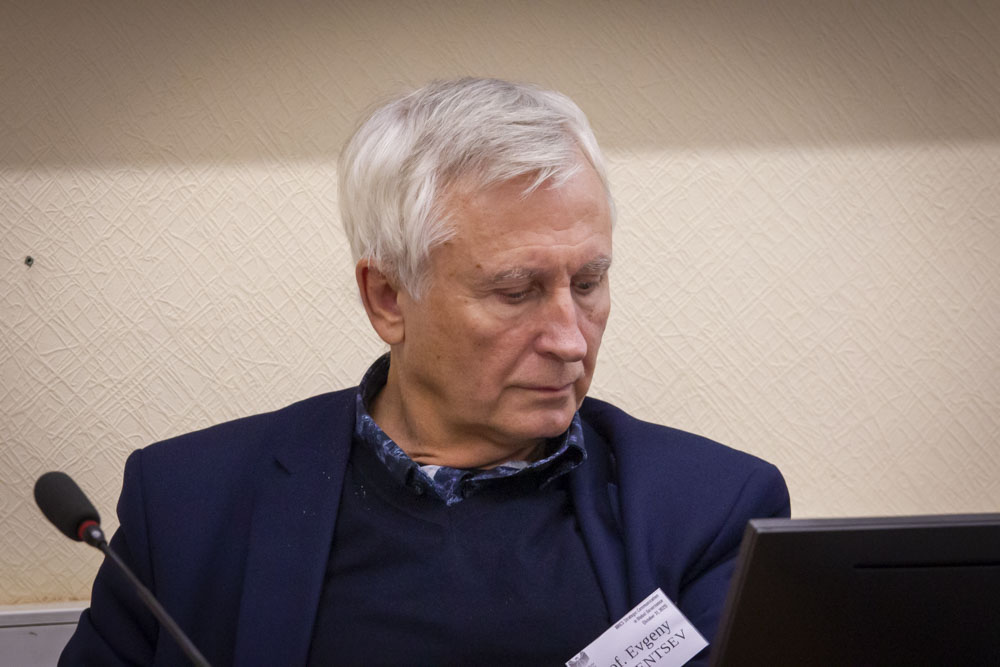
Prof. Pashentsev noted that AI is perceived in modern society as both an opportunity and a threat. What’s often overlooked is that the threat isn’t AI itself, but rather specific social conditions and the malicious actors who exploit these conditions. New technologies, such as AI, can stabilize a social system, but they can also irreversibly unbalance it, even leading to its complete collapse due to errors and the influence of selfish interests. Society has become more dynamic in many areas, but more threats have emerged—growing populism, clashes between different elite groups, the growth of technological and environmental problems, and a crisis in the social sciences, which has arisen, in no small part, due to the lack of interest among social scientists in new and promising technologies. Because of this latter circumstance, it is imperative today to form interdisciplinary research groups that include specialists in both the technical and social sciences. The goal of BRICS is to accumulate this experience at the national and supranational levels, and some important steps have already been taken in this direction, but much more remains to be done.
Prof. Pashentsev analyzed the possibilities and risks of integrating the human mind and AI, and the development of advanced forms of hybrid AI. He emphasized that qualitatively new technological capabilities will need to be matched by a qualitatively new level of physical, mental, and cognitive capabilities, as well as the social responsibility of each individual and society as a whole. Otherwise, the destruction of humanity is more than likely. Unfortunately, the risks associated with general and strong AI (in Prof. Pashentsev’s view, these concepts should be separated) are still far from being properly addressed systemically. However, related concerns are increasingly entering the public consciousness in a distorted, primitive form, which could lead to serious problems in the future.
Currently, there are a number of risks and threats associated with the concentration of capital in new technologies. Prof. Pashentsev identified the first of these risks, those associated with Big Tech. Leading private US technology companies, possessing the largest capital, scientific and technological resources, and human resources in the world in the field of AI, largely control the fears and expectations associated with AI. They disrupt the economic and social balance and create risks of malicious use of AI. By actively stimulating inflated expectations of AI, Big Tech is creating the conditions for a major financial and economic crisis. The second risk is further militarization and an uncontrolled AI “arms race” across countries. The third risk of the not-too-distant future is the near-complete automation and robotization of production, leading to mass unemployment. All of the above can be attributed to issues of international security and sustainable development. Appropriate responses to these risks by the BRICS countries could be demanded by all of humanity and lead to a controlled, qualitative leap in human development, with AI technologies working for people rather than against them.
During the plenary session, Prof. Pashentsev also reported on the preparation of a joint English-language monograph, “BRICS Strategic Communication in Global Governance,” and the potential for publishing conference proceedings in indexed journals across the globe. He also presented the preliminary results of an international survey on BRICS strategic communication, which included researchers from 25 countries. Survey participants expressed support for the idea of creating an interdisciplinary international research center in the field of BRICS strategic communication.
